BarRaiser positions itself as the “data-driven” Interview-as-a-Service platform. Its promise is to reduce interviewer subjectivity using real-time AI prompts, transcripts, and post-interview analytics.
That promise is partly fulfilled.
BarRaiser does improve interviewer behavior during the interview. But improvement at the interviewer level is not the same as consistency at the system level. And for companies hiring at scale across roles, that distinction matters.
This review breaks down what BarRaiser genuinely gets right, where its approach stops short, and how Intervue solves the same problems by starting with structure instead of layering AI on top.
BarRaiser at a glance

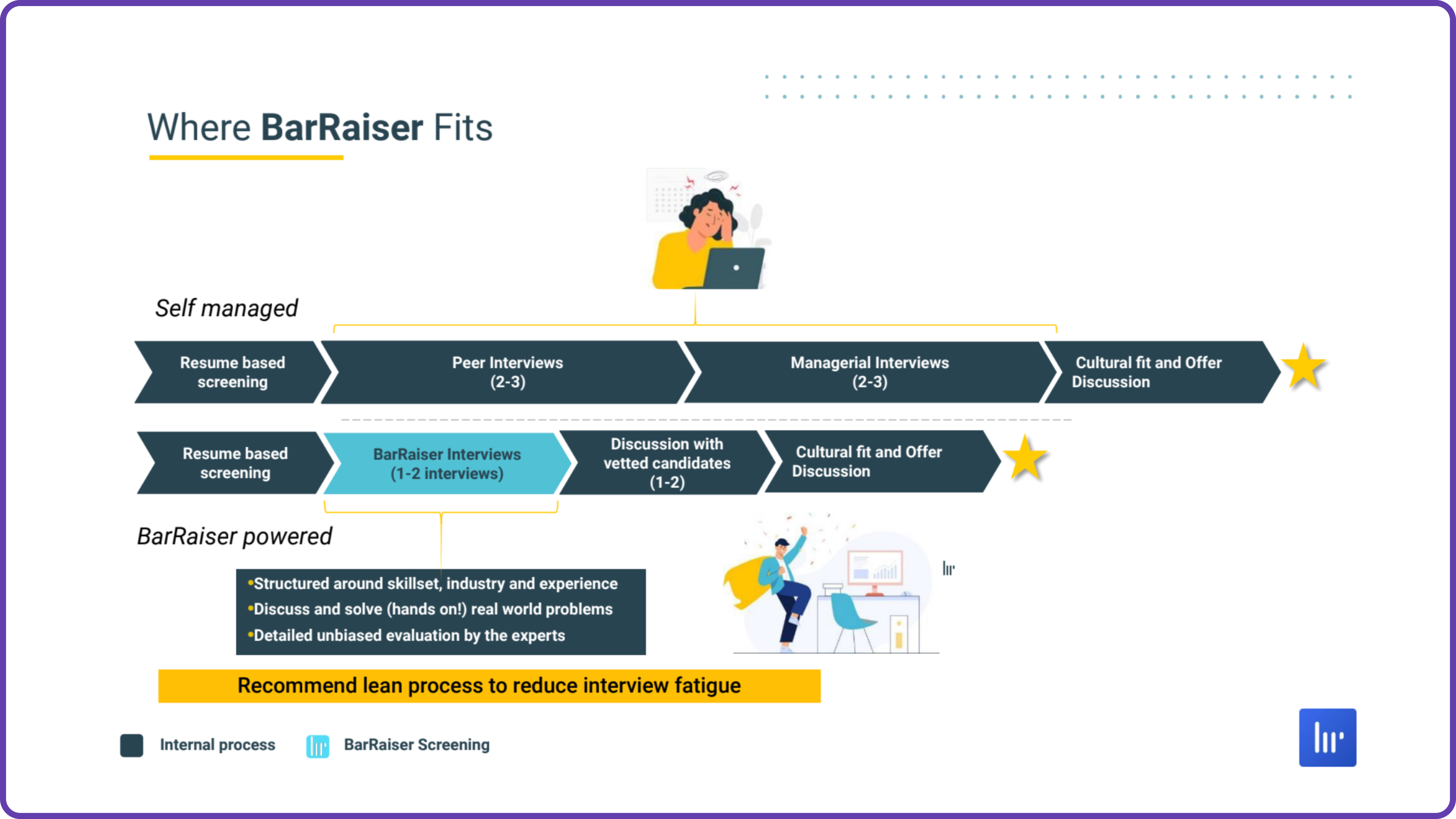
BarRaiser is an AI-assisted interview platform centered around its Interview Copilot. The Copilot listens to interviews in real time, suggests follow-up questions, flags weak probing, and generates transcripts and reports afterward.
The platform also:
- Records and transcribes every interview
- Integrates with 40+ ATS tools
- Highlights “200+ data points” to support hiring decisions
BarRaiser is polished and enterprise-ready. It is also clearly built with IT hiring as its primary use case.
Pros and Cons
Pros
- AI Interview Copilot provides real-time prompts and interviewer coaching
- Strong brand credibility with well-known enterprise customers
- Responsive support across global time zones
Cons
- Designed primarily for IT roles, with limited depth for non-technical hiring
- No skill-and-sub-skill rubric structure; evaluation relies on broad skill tags
- Interviewer credentials are not shared with clients post-interview
- Premium pricing, especially hard to justify for junior roles
- No free trial; every engagement starts with a sales cycle
BarRaiser feature breakdown
1. The Interview Copilot improves interviews, not evaluation
Real-time AI copilots are a band-aid for a foundational flaw. They exist to whisper hints to interviewers during a call because those interviewers lack deep domain expertise or a clear plan.
The result? Total inconsistency. Two interviewers using the exact same AI copilot can interview the same candidate and walk away with completely different hiring decisions. AI can nudge someone to ask a better follow-up, but it cannot define what "good" actually looks like.
How is Intervue Different?
Interviewers are carefully matched to the role based on proven expertise, ensuring they are fully qualified to assess that specific position. This removes the need for a co-pilot whose sole purpose is to support interviewers when they lack domain knowledge.
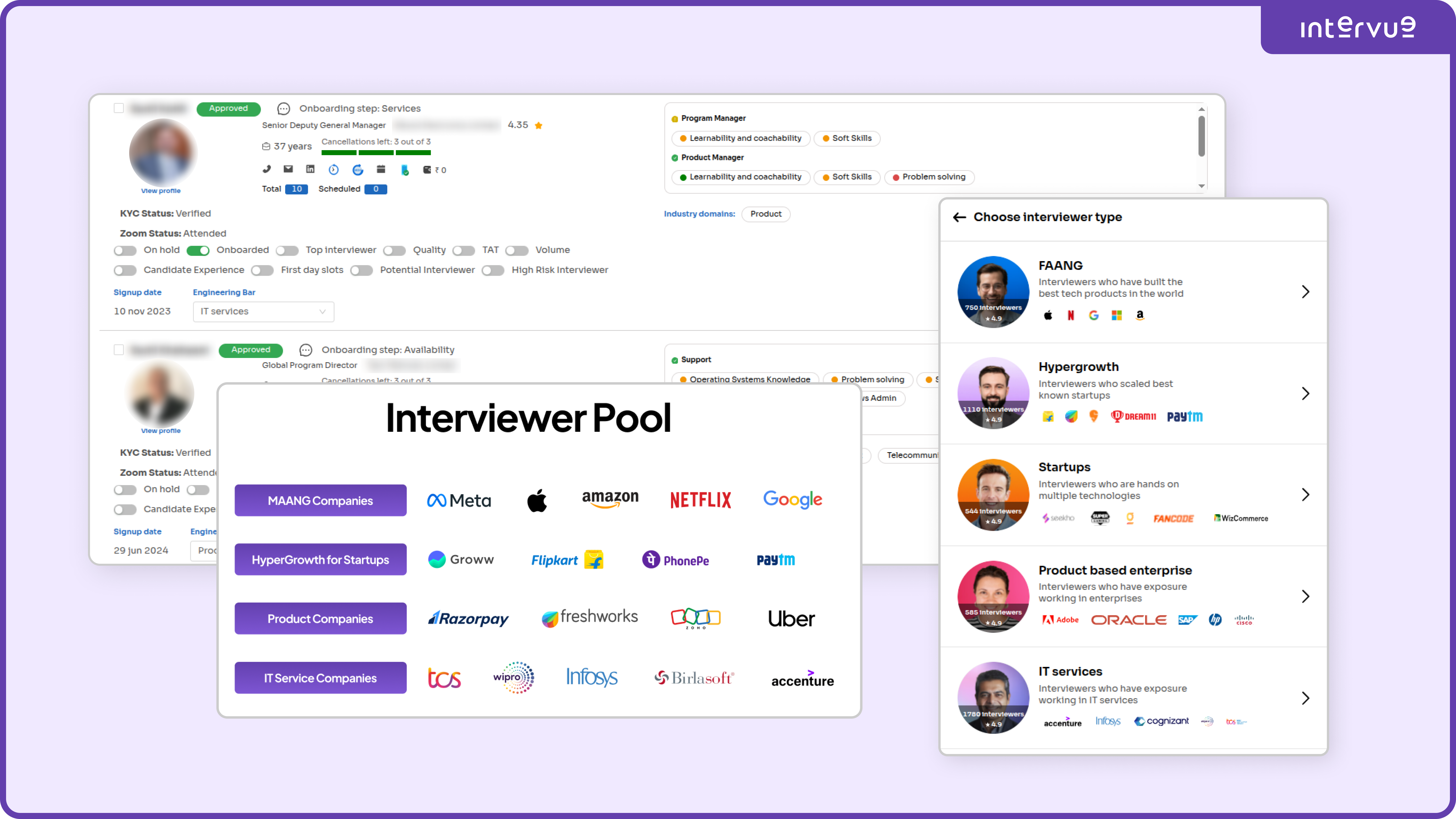
The contrast highlights a fundamental difference between BarRaiser and Intervue: the depth and readiness of the interviewers assigned to each role.
2. Skill labels are not the same as rubrics
BarRaiser structures interviews around primary and secondary skills defined by the client. Interviewers know what areas to cover, but interpretation is left largely to individual judgment.
That flexibility sounds attractive until interview volume increases.
Without sub-skill definitions and scoring criteria, reports become harder to compare. Calibration effort increases. Hiring managers spend more time re-interpreting feedback instead of acting on it.
How is Intervue Different?
Intervue uses true rubrics. Each skill is broken into sub-skills with defined expectations and scoring logic.
Instead of “assess System Design,” interviewers evaluate:
- Scalability reasoning
- Trade-off articulation
- Data modeling clarity
Each scored independently.
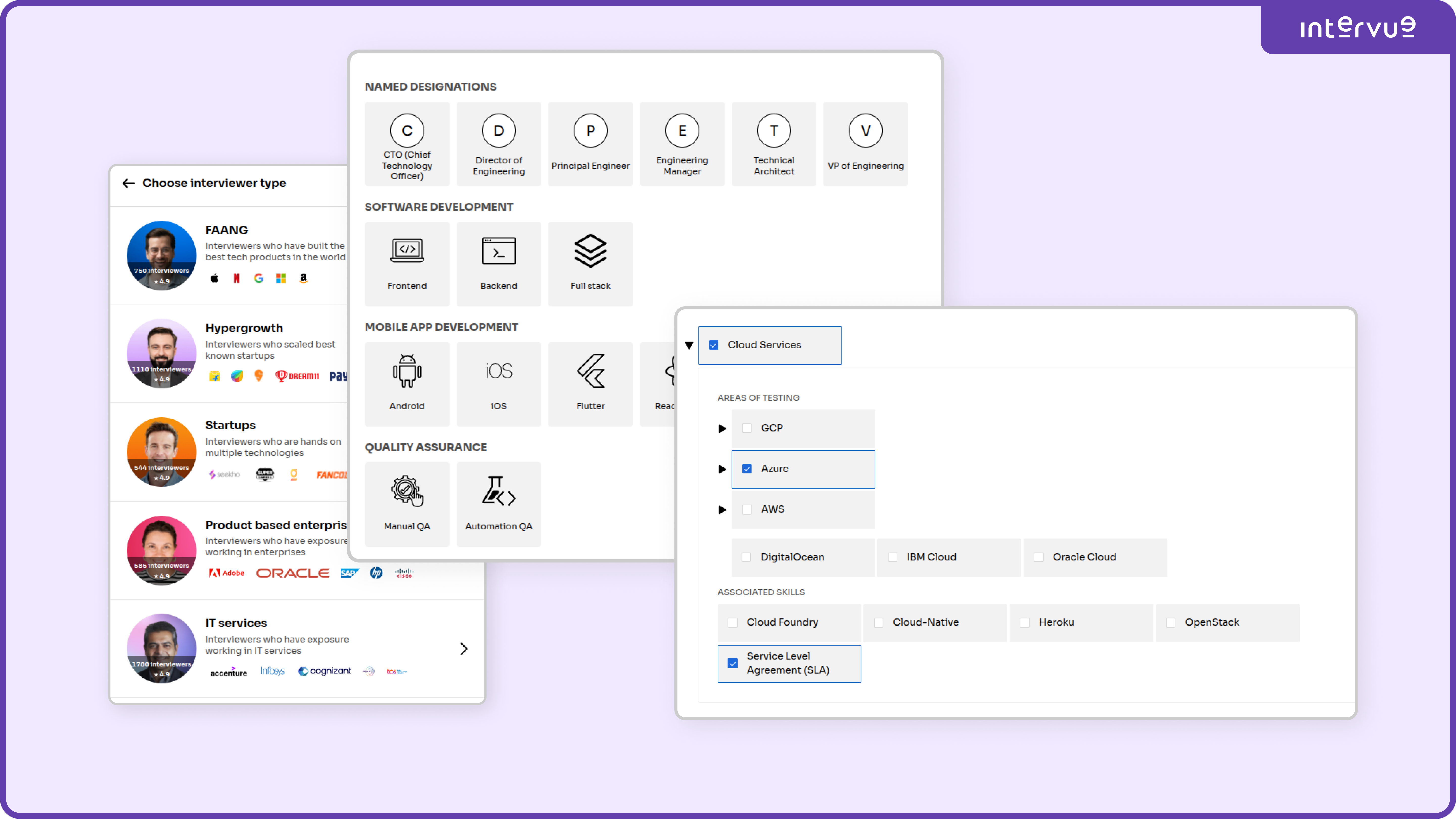
This is what makes reports comparable across interviewers, candidates, and time. Consistency does not come from AI prompts. It comes from rubric depth.
3. Interviewer opacity creates downstream friction
After a BarRaiser interview, clients receive recordings, transcripts, and scorecards. What they do not receive is the interviewer’s identity or credentials.
This becomes a problem the moment a hiring manager has a follow-up question.
Was the interviewer experienced in this tech stack?
Did they challenge assumptions or simply accept answers?
Without interviewer context, managers are forced to rewatch recordings or second-guess conclusions.
How is Intervue Different?
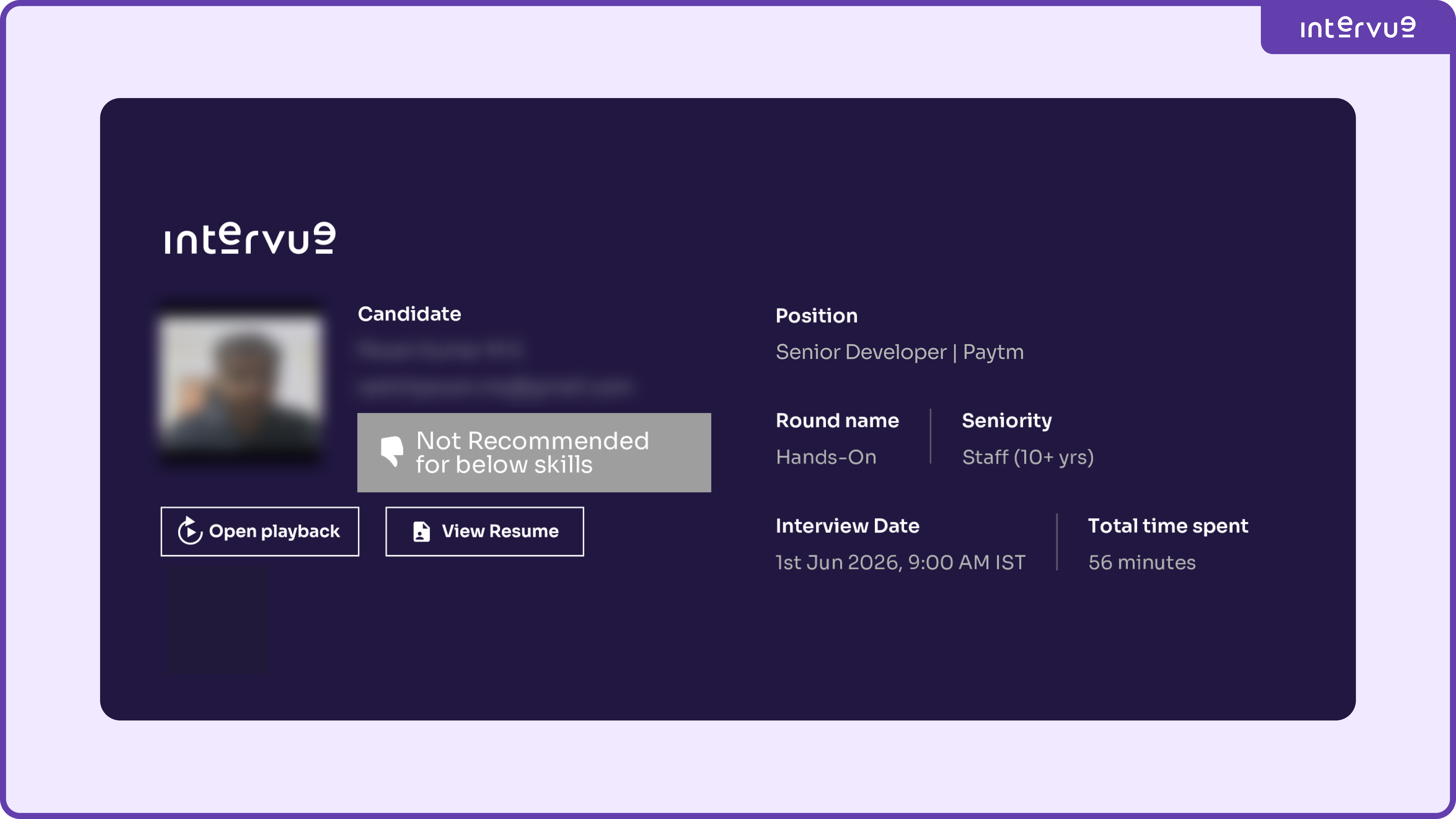
Intervue shares interviewer credentials post-interview. When clarification is needed, there is accountability and a real expert to engage with.
4. Candidate reminders are solid but not differentiating
BarRaiser performs well on scheduling and candidate reminders. Reviews consistently cite low no-show rates.
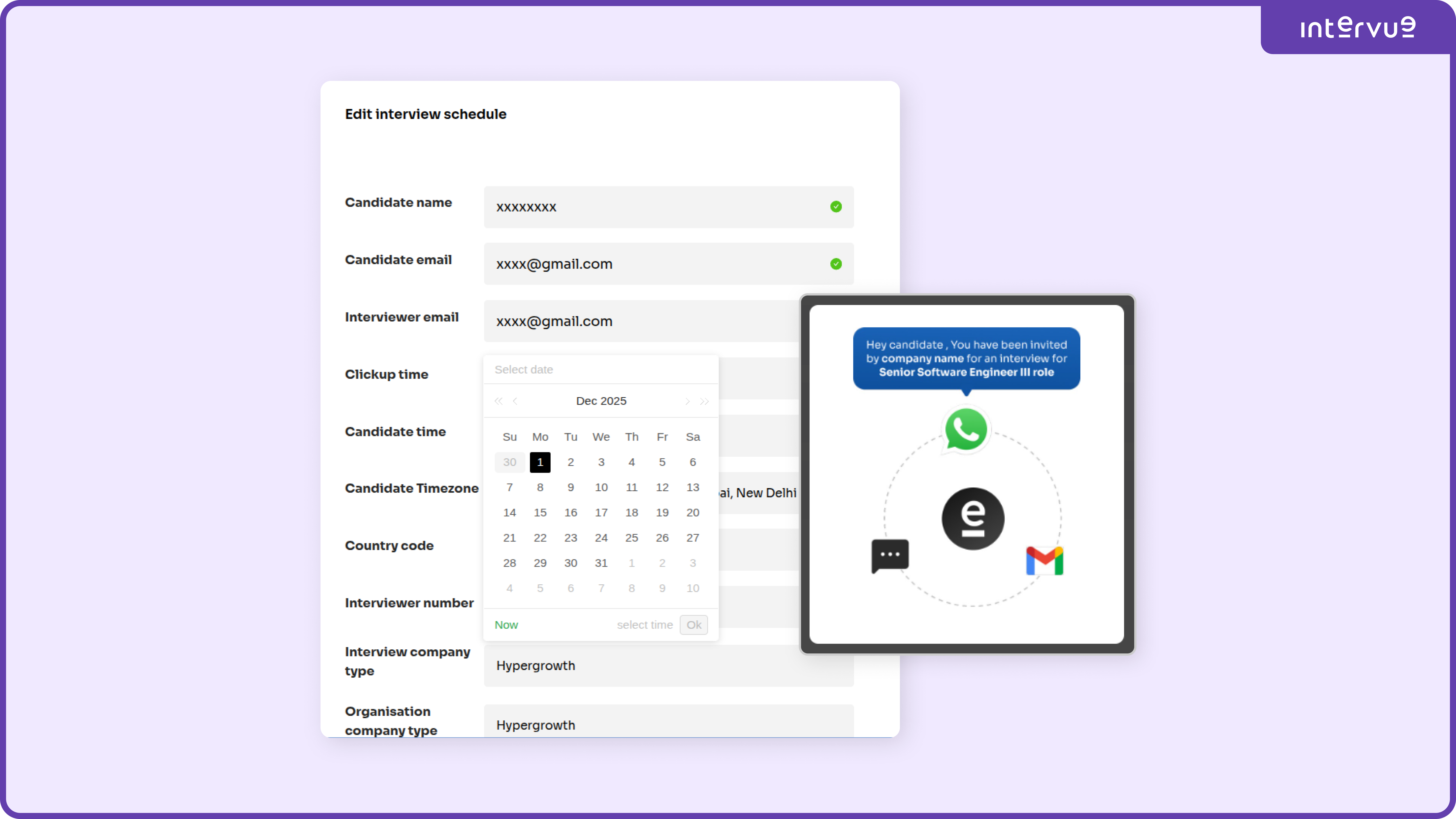
Intervue runs a six-level reminder sequence across email, SMS, and WhatsApp, putting both platforms on roughly equal footing here.
If reminders are your primary concern, this should not drive the decision. The real differences lie in evaluation structure and coverage.
5. IT-first design limits cross-functional scale
BarRaiser’s question library, Copilot training, and case studies are overwhelmingly focused on software engineering roles.
For teams hiring across sales, operations, customer success, finance, or other non-IT functions, the product feels thinner and less opinionated.
How is Intervue Different?
Intervue applies the same rubric-based structure across IT and non-IT roles.
A sales interview receives the same evaluation rigor as an engineering interview, using the same system.
BarRaiser pricing
BarRaiser does not publish pricing and does not offer a free trial. Every engagement begins with a sales conversation.
Independent reviews frequently note that pricing is on the higher side, particularly for junior-level interviews where the cost-to-value ratio is harder to justify.
BarRaiser makes the most sense when hiring is concentrated in senior technical roles. It becomes harder to rationalise when hiring spans levels and functions.
The alternative: Intervue
If BarRaiser appeals to you because you want structured, consistent, less biased interviews, Intervue is built around the same goal, but from a more foundational starting point.
Where BarRaiser adds AI guidance on top of loosely defined skills, Intervue starts with structure itself:
- Rubric-based evaluation with skills broken into defined sub-skills
- Coverage across IT and non-IT roles on one platform
- Interviewer credentials shared post-interview
- Six-level candidate reminder sequence
- Transparent, volume-friendly pricing without mandatory sales cycles
Additional Intervue advantages
Live interview visibility
Hiring leaders can observe interviews in real time for audits, calibration, and quality control.
Fast report turnaround
Detailed interview feedback is delivered within approximately two hours, reducing decision delays and candidate drop-off.
24/7 global scheduling
Panels are aligned to skill requirements first, then scheduled across time zones without compromising quality.
BarRaiser vs Intervue: which one fits?
BarRaiser is a strong choice for enterprise teams hiring primarily for technical roles and willing to pay for real-time AI guidance during interviews.
Intervue is a better fit if you need:
- The same rigor applied to IT and non-IT roles
- Evaluation criteria defined at the sub-skill level
- Direct accountability through shared interviewer credentials
- One platform across functions instead of multiple tools
Intervue covers more of the hiring lifecycle without asking you to trade structure for AI assistance.
Frequently Asked Questions
What is BarRaiser used for?
BarRaiser is an AI-assisted interview platform offering real-time interviewer prompts, recordings, transcripts, and analytics, primarily for enterprise technical hiring.
Does BarRaiser support non-IT interviews?
Yes, but its depth, training data, and case studies are heavily skewed toward IT and engineering roles.
Does BarRaiser use structured rubrics?
No. It relies on client-defined primary and secondary skills rather than sub-skill-level rubrics with defined scoring criteria.
Are interviewer credentials shared after a BarRaiser interview?
No. Clients receive recordings and reports, but not interviewer identity or credentials.
What is a strong alternative for IT and non-IT hiring?
Intervue offers rubric-based evaluation, shared interviewer credentials, fast reporting, and consistent structure across functions.