Here's a scenario most candidates have lived through.
Weeks of preparation. Problems solved. Concepts revised. Behavioral stories rehearsed. You walk into the interview feeling ready, and then freeze the moment a real person is watching, waiting, and asking follow-up questions you didn't anticipate.
The issue isn't preparation. It's the kind of preparation. Studying alone builds knowledge. Performing under observation, with a real person on the other side, in real time, that's a completely different skill. And the only way to build it is to practice it.
Whether you're targeting a FAANG company, a high-growth product startup, or an established IT firm, the interview loop will test you under real pressure. These are the 4 best platforms to practice that pressure before it counts.
Why Practicing Before Your Interview Changes Everything
Most candidates spend 90% of their preparation time in a completely non-interview-shaped environment. They solve problems in a comfortable IDE. They rehearse answers in their head. They read guides about what good answers look like.
None of that involves the two skills interviews actually test: thinking out loud under time pressure, and communicating clearly while another person is evaluating you.
This is true whether you're walking into a FAANG loop, a product company's hiring round, or an IT company's technical assessment. The format differs: FAANG pushes harder on algorithmic complexity and system design at scale, product companies weigh execution and ownership more heavily, IT firms focus on core engineering fundamentals, but every single one of them requires you to perform under observation.
The first time you experience that in a real interview is the worst possible moment to discover it's hard.
Practice platforms exist to collapse that gap, so your first experience of real interview pressure happens before anything is at stake.
1. Intervue.io - Closest Thing to the Real Interview
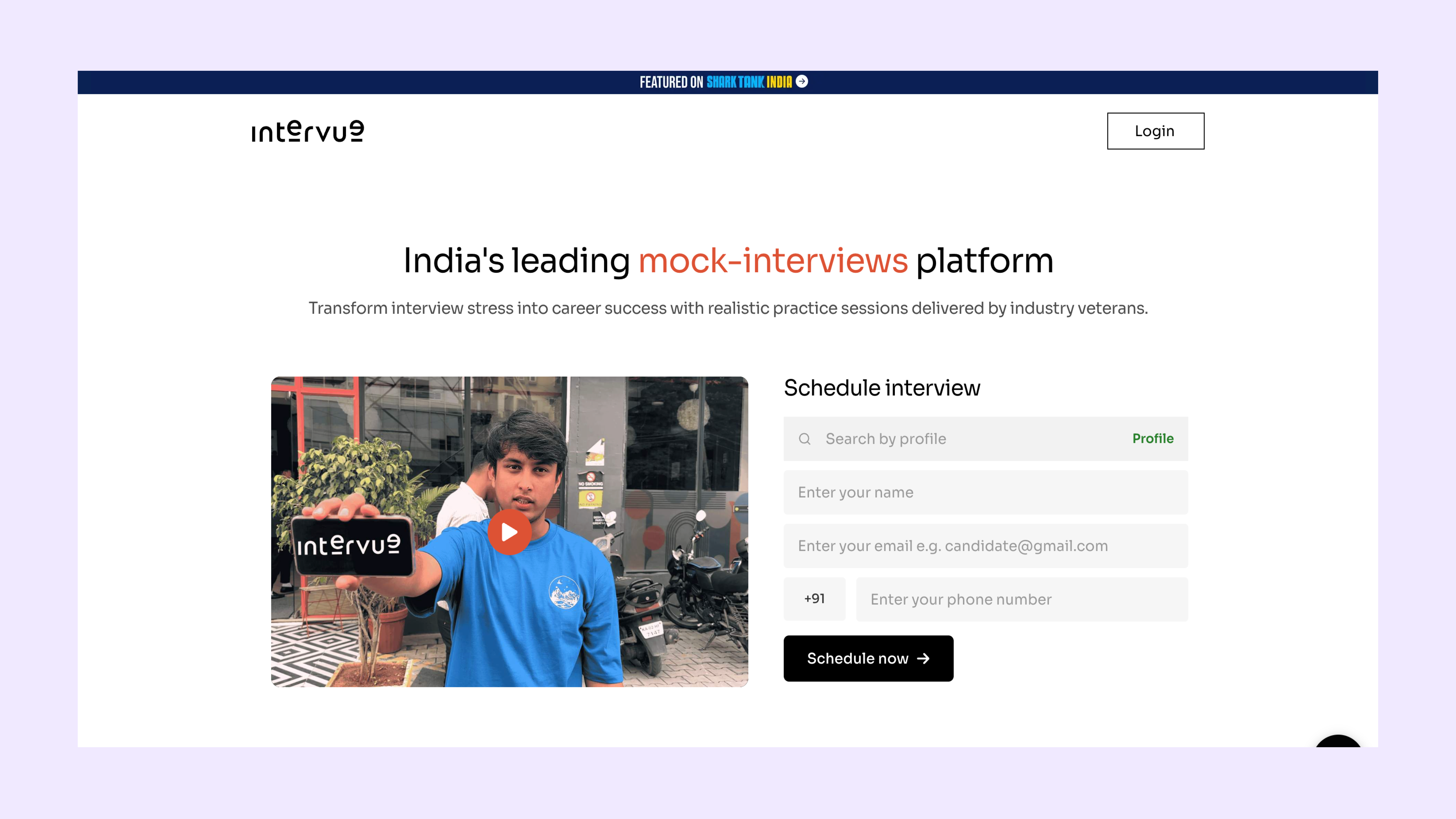
What it is: Intervue.io runs mock interview sessions conducted by experienced engineers and hiring professionals, people who have actually sat on the other side of the table and evaluated candidates for real roles.
Whether you're preparing for a FAANG interview loop, targeting a product company like Razorpay, Swiggy, or Zepto, or going after an IT firm like TCS, Infosys, or Wipro, Intervue.io covers the full spectrum of interview formats that each type of company runs.
FAANG interviews demand algorithmic depth, system design at scale, and tight behavioral storytelling. Product company interviews test product thinking, ownership, and execution under ambiguity. IT firm interviews assess core engineering fundamentals, domain knowledge, and communication. Intervue.io structures mock sessions specifically around whichever of these formats you're targeting, not a generic one-size-fits-all session.
Why it works: The highest-value feedback you can get in interview prep isn't "your answer was correct." It's "here's what an interviewer actually noticed, here's where you lost them, and here's the specific thing to fix before you do this again."
That calibration is only available from someone who has interviewed people before. Not a peer who's also preparing. Not an AI scoring system. A real engineer who knows what a hiring-bar answer looks like at a FAANG company, and what a borderline one looks like too.
Intervue.io is built around delivering that kind of feedback, structured and specific, after every session.
What you can practice:
- Coding and DSA rounds (FAANG and product company format)
- System design interviews (scaled for FAANG, mid-scale for product companies)
- Behavioral and leadership rounds
- Core engineering rounds for IT company interviews
- Role-specific technical interviews across domains
When to use it: Don't save Intervue.io for the final week before your interview. Start 3–4 weeks before your loop, run 2–3 sessions spread across your prep, and let the feedback from each session direct what you study next.
The sessions that happen when you still have time to fix things are the sessions that matter most.
👉 Start practicing on Intervue.io
2. Exponent - Free Peer Practice at Scale
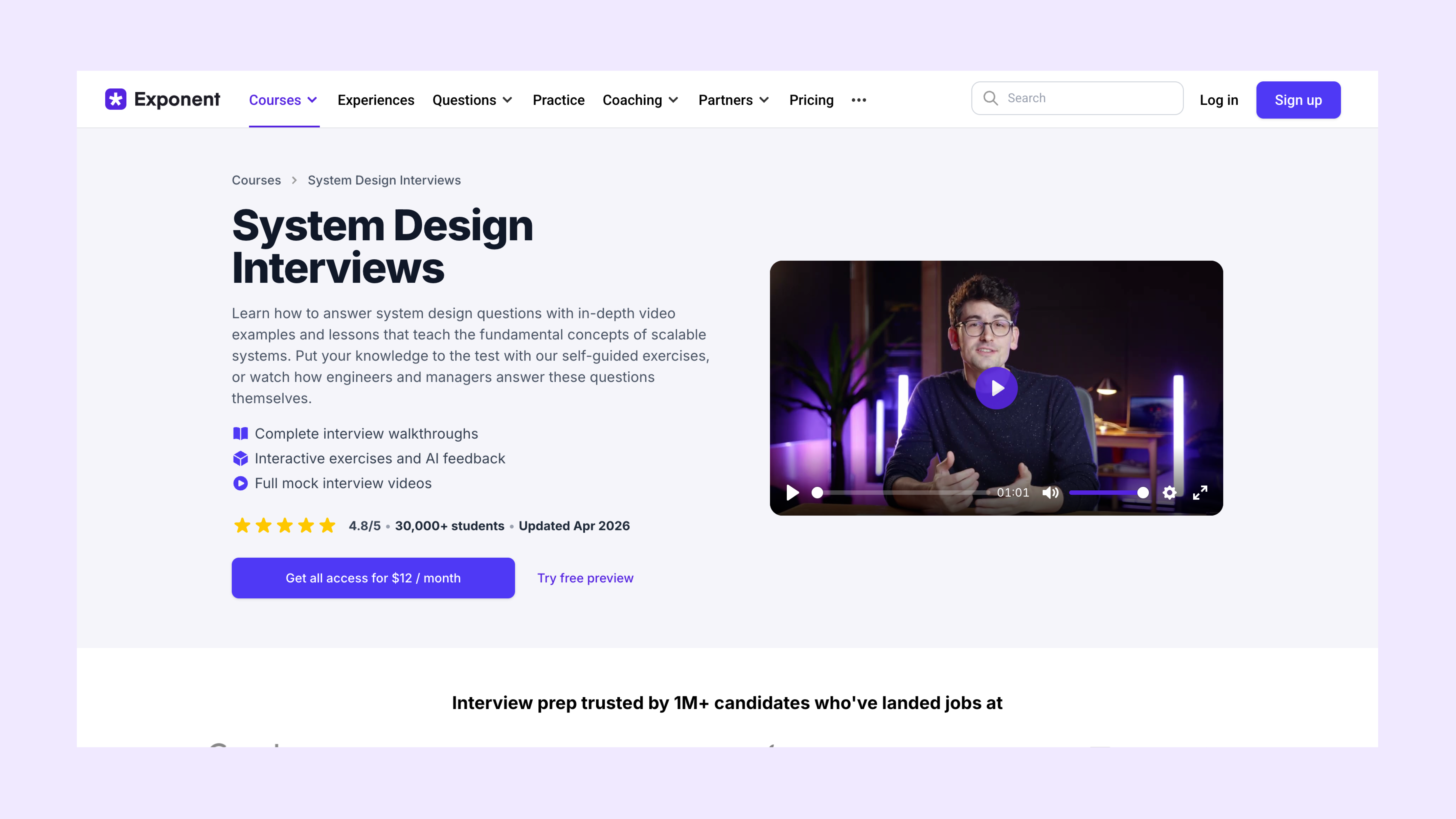
What it is: Exponent (which absorbed Pramp in 2024) is the largest free peer-to-peer mock interview platform available. It matches you with another candidate preparing for a similar role and interview type, and you take turns, one session you're the candidate, and the next you're the interviewer.
Why it works: Free platforms that offer real human interaction, not a chatbot, not a pre-recorded question, are rare. Exponent delivers both. You're sitting across from another engineer who is equally motivated to make the session useful, because they need the same practice you do.
The role-reversal format also builds a skill most candidates never develop during solo prep: the ability to evaluate what a strong answer actually looks like from the other side. Candidates who have done this consistently report a sharper sense of what interviewers are looking for, which directly improves their own performance.
What you can practice:
- Coding and DSA rounds
- System design interviews
- Behavioral interviews
- Frontend, data science, and product management roles
One honest limitation: Peer feedback has a natural ceiling. Your practice partner is also preparing for interviews, their calibration isn't the same as an experienced engineer's. This makes Exponent excellent for building fluency, format comfort, and interview stamina. It's a weaker substitute for expert feedback when you're close to an actual loop.
When to use it: Weeks 6–10 of preparation. Use Exponent to build comfort with the interview format and practice communicating your reasoning. Layer in expert sessions from Intervue.io as your target interviews get closer.
3. InterviewBuddy - Live Expert Sessions Accessible Across India
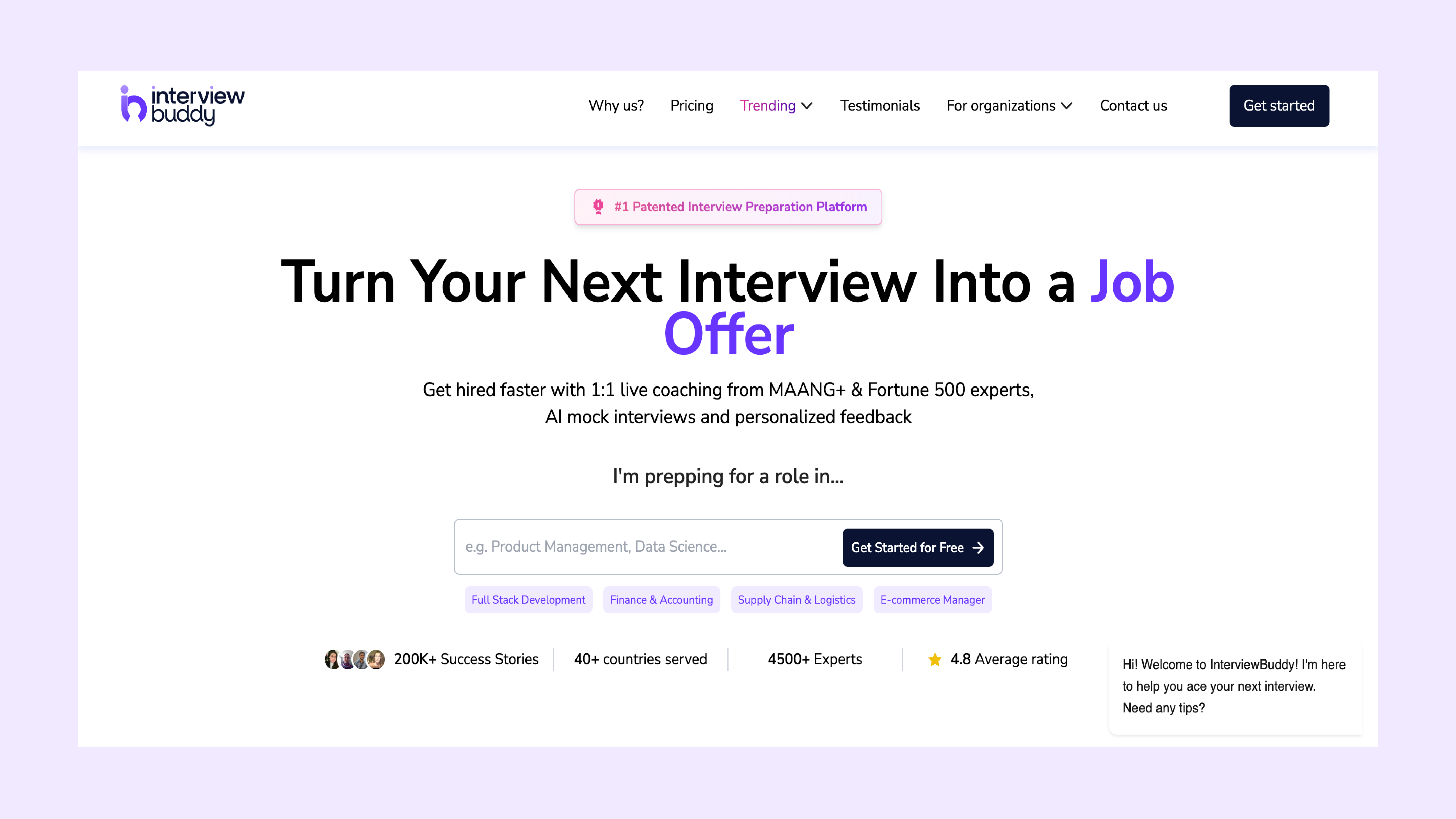
What it is: InterviewBuddy is a mock interview platform that connects candidates with verified industry experts for live, one-on-one sessions over video. Sessions cover tech, product, finance, digital marketing, and other domains. Their pay-per-session model makes it accessible without a long-term subscription commitment, and pricing is structured to be practical for candidates across India and Southeast Asia.
Why it works: The core value is the same as any expert mock session: you get feedback from someone who has hired people before, not just from someone who's preparing alongside you. InterviewBuddy's strength is the breadth of coverage, it works well for non-engineering roles where most other technical mock platforms don't go, and the expert pool is drawn from industry professionals across multiple sectors.
For candidates in India preparing for product companies, service firms, or cross-functional roles, it fills a gap that platforms built primarily for US-based software engineering candidates often leave open.
What you can practice:
- Technical software engineering interviews
- Product and program management
- Finance, consulting, and strategy roles
- Domain-specific rounds for data, marketing, and operations
When to use it: Useful throughout the active preparation phase especially for candidates in non-pure-engineering roles who want human feedback but find other platforms either too expensive or too narrowly focused on FAANG software engineering.,
4. LeetCode Mock Interviews - Timed Pressure Without Scheduling
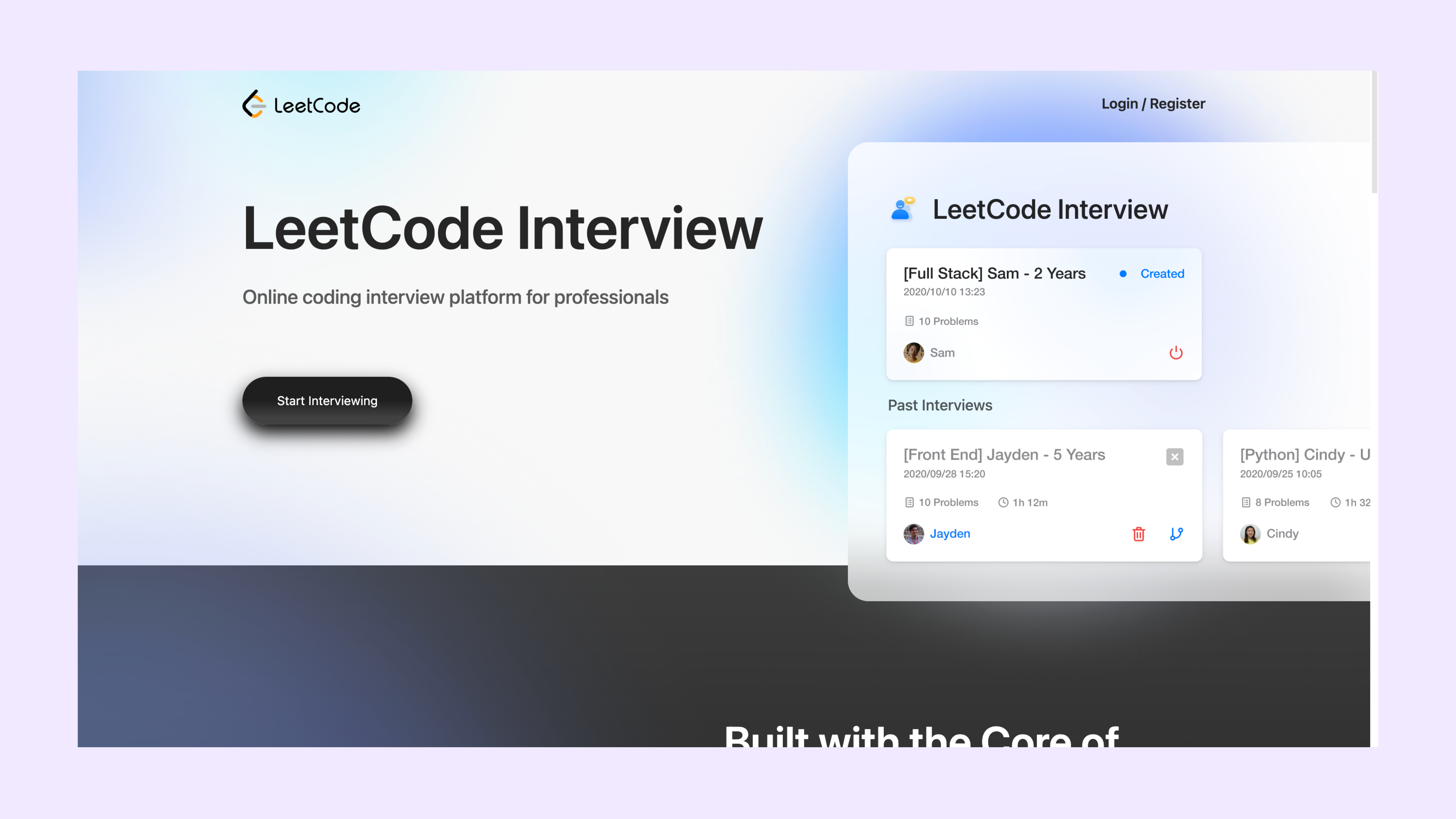
What it is: LeetCode's built-in mock interview feature generates a timed coding session using real interview questions from its problem database. You select the difficulty level and filter by company, the clock starts, and the environment gives you nothing beyond what a real online assessment would, no hints, no auto-complete, no pause button.
Why it works: The skill most candidates underinvest in during solo DSA preparation is solving problems under a real time constraint, in a stripped-down environment, with no room to pause and think. LeetCode's mock interview tool creates exactly this.
Solving 200 problems in a comfortable setup is not the same preparation as solving 30 problems under timed, constrained conditions. The latter trains the composure and speed that actual coding rounds test. Most candidates only discover this difference during their first real phone screen.
The honest limitation: LeetCode has no feedback on how you communicated. It tells you whether your code is correct and how it performs. It cannot tell you whether your explanation was clear, whether you took too long to start, or whether your edge case handling impressed the interviewer. For that, you need a person on the other side.
Use LeetCode Mock Interviews for coding speed and stamina. Use Intervue.io or Exponent for the communication and performance layer on top.
When to use it: Throughout your DSA preparation, from week 5 onward. Aim for 2–3 timed mock sessions per week once you've worked through the core algorithm patterns.
Summary
Knowing how to answer interview questions and being able to answer them under real pressure are two different things. The gap between them is what practice platforms close.
Each of the four platforms above targets a specific part of that gap:
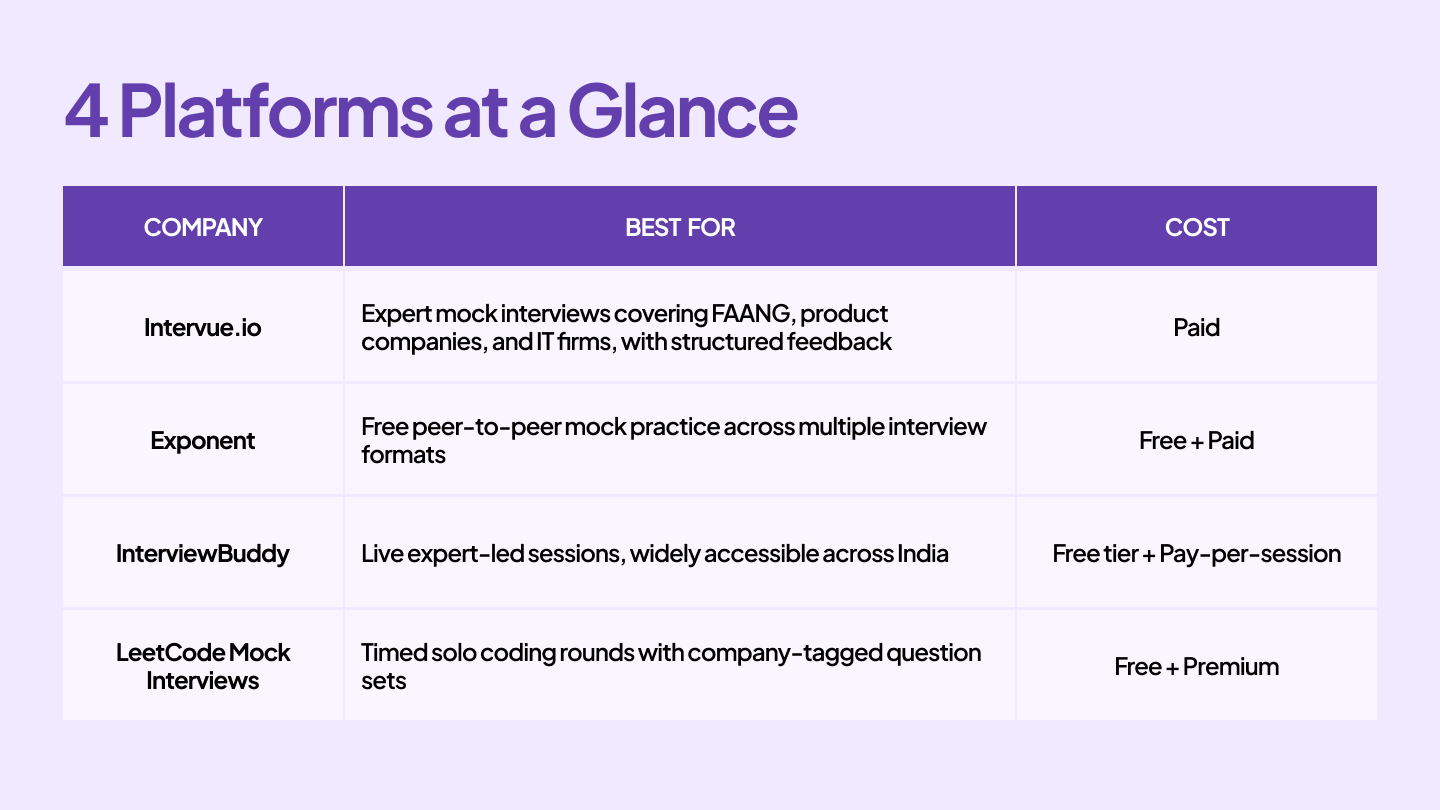
- Intervue.io - expert mock interviews covering FAANG, product companies, and IT firms, with structured round-specific feedback and the closest simulation of a real hiring loop
- Exponent - free peer-to-peer practice for building format fluency and interview stamina
- InterviewBuddy - live expert sessions accessible across India, strong for non-engineering and cross-functional roles
- LeetCode Mock Interviews - timed coding pressure without scheduling friction
Start earlier than feels comfortable. The feedback you get with three weeks left to prepare is worth ten times the feedback you get three days out.