Most candidates preparing for FAANG interviews are staring at the same problem: too many resources, not enough clarity on where to actually start.
YouTube has become one of the most effective free tools for interview prep, but only when you know which videos are worth your time and why. Channels like NeetCode, ByteByteGo, Gaurav Sen, and Exponent have quietly become the go-to prep resource for engineers targeting big tech, and for good reason.
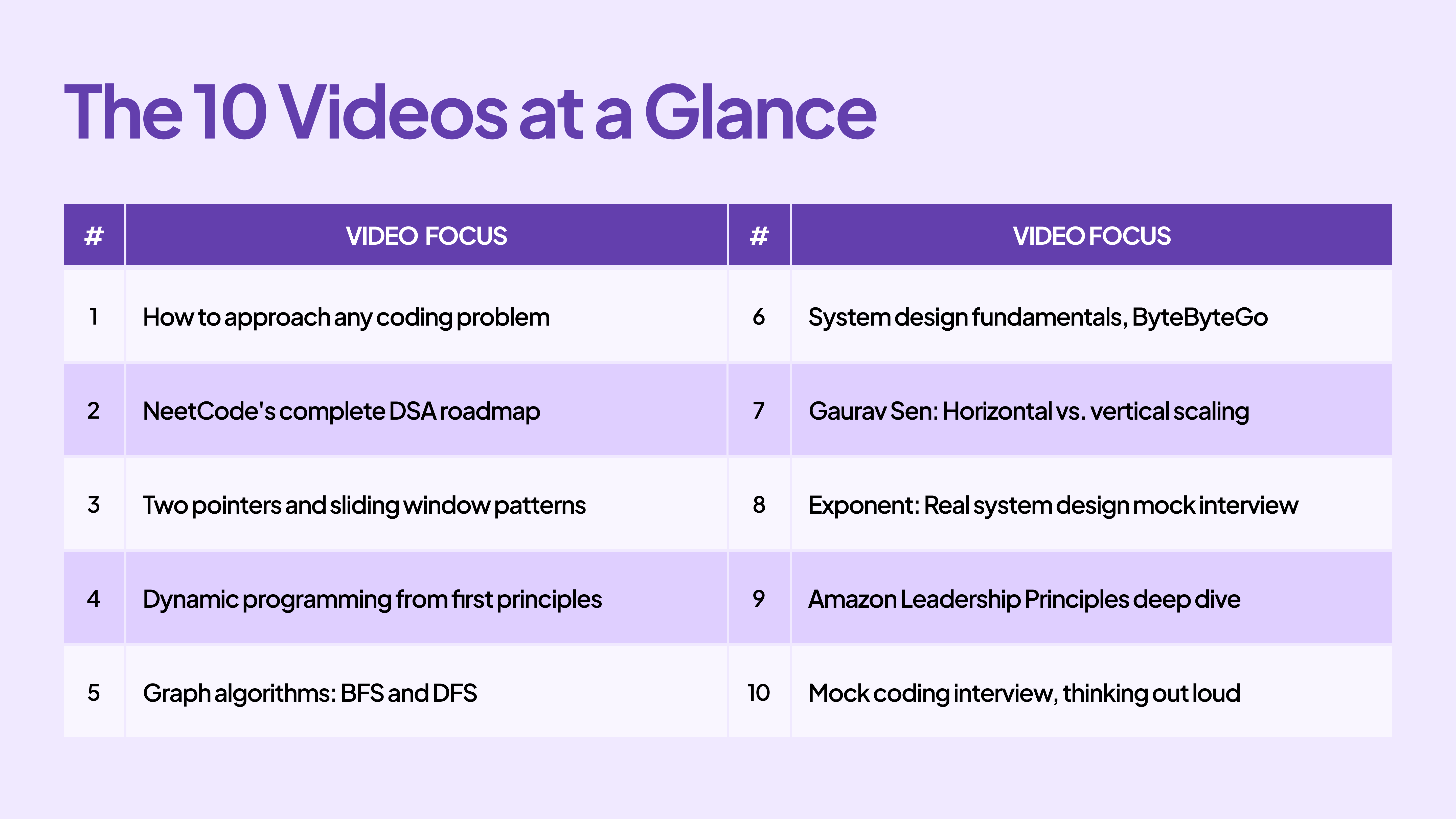
This list cuts through the noise. These 10 YouTube videos cover DSA fundamentals, system design walkthroughs, behavioral preparation, and mock interview practice, each picked for a specific gap in your preparation, not just general popularity.
Watch them in order. Each one builds on the last.
The 10 Videos at a Glance
Why YouTube Works for FAANG Prep
Before getting into the list, it's worth being direct about how to use these videos.
Watching is not practicing. A video can show you how a two-pointer solution works, but until you've solved it yourself under a timer while talking out loud, you haven't built the skill the interview actually tests.
Use these videos to build mental models and understand frameworks. Then immediately apply them by solving problems on your own. The candidates who get the most out of YouTube content are the ones who pause frequently, write code alongside the video, and then re-solve the problem the next day from scratch without rewatching.
With that said, here are the 10 videos.
1. How to Solve Any Coding Interview Problem
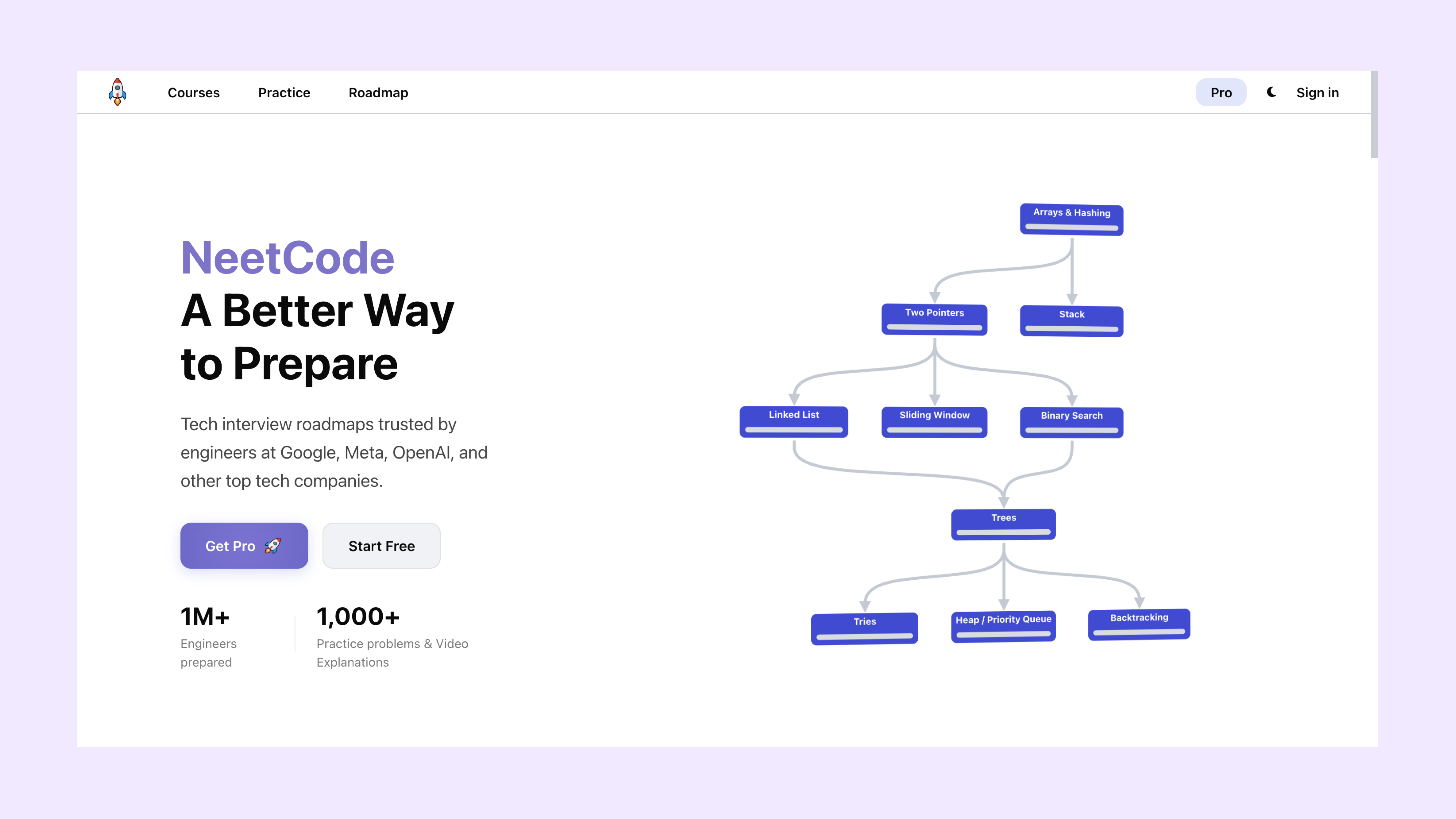
What it covers: A structured thinking framework for approaching problems you've never seen before, how to break down the prompt, identify constraints, choose a data structure, and move toward a solution even when the answer isn't immediately obvious.
Why this video first: Most candidates start by diving straight into problem-solving without a consistent approach. This video changes that. It gives you a repeatable process to fall back on when you're stuck in a live interview, which is exactly when you need it.
Who should watch it: Every candidate, regardless of experience level. Even engineers with strong DSA backgrounds often underperform in interviews because their process breaks down under pressure.
What to do after watching: Apply the framework to 5 new problems on LeetCode before moving to the next video. Don't skip this step.
2. Complete DSA Roadmap for FAANG
A walkthrough of the full NeetCode 150 problem set, organised by topic, difficulty, and the order you should tackle them. Covers which patterns matter most, what to skip when short on time, and how to build up difficulty progressively.
Why this matters: Most candidates either over-prepare in one area (usually arrays) or tackle problems randomly without a map. This video shows you the entire landscape and lets you allocate preparation time intelligently.
Who should watch it: Candidates who are 8–12 weeks out from interviews and need to build a structured study plan from scratch.
Key insight from this video: Pattern-based learning, understanding the 15 core patterns that unlock hundreds of problems, consistently outperforms brute-force volume in FAANG prep. This video shows you how to organize your learning around that principle.
3. Two Pointers and Sliding Window Explained
Two of the most frequently tested patterns in FAANG coding rounds, explained with clear visual walkthroughs and multiple problem examples. Covers when to use each, how to set up the pointer logic, and how the window expansion/contraction logic works.
Why this matters: These two patterns appear across a disproportionate share of array and string problems at FAANG companies. Getting them right early accelerates your ability to handle a large class of medium-difficulty questions.
Who should watch it: Candidates in weeks 1–3 of preparation, immediately after establishing their DSA foundation.
Practice recommendation: After watching, solve at least 8–10 problems from the two-pointer and sliding window categories on LeetCode or NeetCode before moving on. Speed on these patterns is a multiplier across the rest of your prep.
4. Dynamic Programming for Beginners, NeetCode
A ground-up explanation of dynamic programming, what it is, why it works, and how to think about subproblems, overlapping solutions, and building from base cases. Walk through both memoisation (top-down) and tabulation (bottom-up) with visual examples.
Why this matters: DP is the pattern that causes the most anxiety among FAANG candidates, and for understandable reasons, it requires a different way of thinking about problems. This video breaks that barrier.
Who should watch it: Any candidate who sees "dynamic programming" and immediately freezes. The video is designed for that exact reaction.
What separates good DP prep from bad: Understanding why a subproblem structure exists in a given question, not memorising the solution. This video teaches the former.
5. Graph Algorithms: BFS, DFS, and When to Use Each, Back to Back SWE
What it covers: A detailed walkthrough of breadth-first search and depth-first search, how each algorithm traverses a graph or tree, what problems each is suited for, and how to implement both iteratively and recursively.
Why this matters: Graph and tree problems are a fixture across all FAANG coding rounds. The ability to confidently implement BFS and DFS and recognize when to apply each is a baseline expectation at the mid-level and above.
Who should watch it: Candidates in weeks 4–5 of preparation, after completing array and string patterns.
One thing to pay attention to: The video's explanation of when BFS is preferable to DFS (and vice versa) is especially useful for answering follow-up questions in live interviews, where interviewers often ask you to justify your algorithmic choice.
6. System Design Fundamentals You Must Know
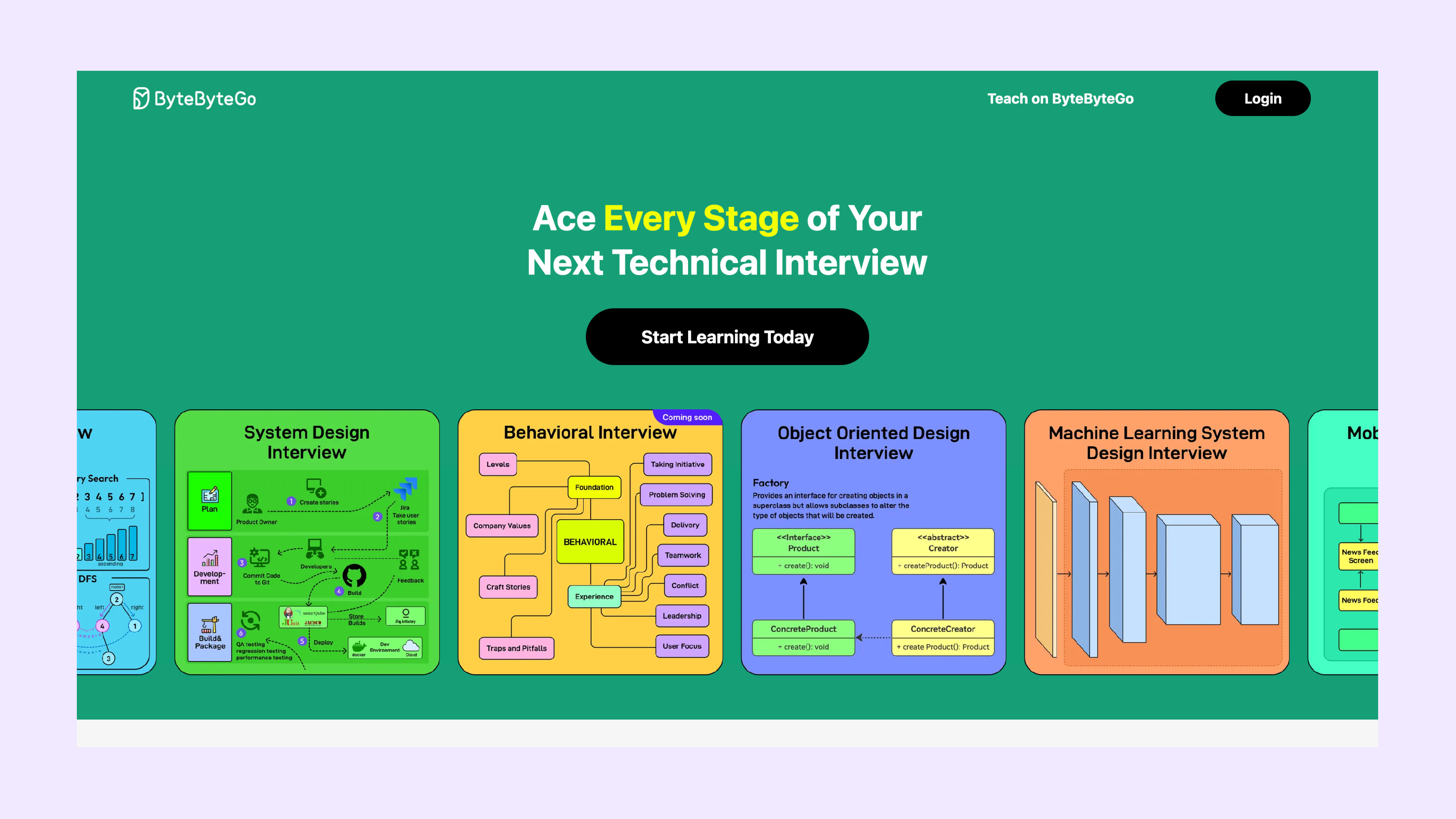
What it covers: A visual, pattern-organized walkthrough of the foundational building blocks of system design, load balancers, databases (SQL vs. NoSQL tradeoffs), caching strategies, message queues, horizontal scaling, and CDNs.
Why this matters: ByteByteGo, created by Alex Xu, author of the System Design Interview book series, has become the most widely recommended starting point for system design prep. This particular video is the best entry point because it covers the components that appear in virtually every system design question you'll face.
Who should watch it: Candidates who are new to system design or who have been delaying it. Watch this in week 7–8 of your preparation.
After watching: Don't go straight to practice problems. Spend a few days building genuine understanding of each component, what it does, when you'd choose it, and what it costs. System design interviewers probe the reasoning behind design choices, not just the choices themselves.
7. Horizontal vs. Vertical Scaling Explained
One of the most foundational decisions in system design, why you scale horizontally (adding more machines) versus vertically (adding more power to one machine), when each approach hits its limit, and what the architectural implications are for the systems you're designing.
Why this video specifically: Gaurav Sen's strength is conceptual depth. Where other channels tell you what the answer is, Gaurav explains why it's true. This video builds the kind of first-principles understanding that lets you reason through questions you haven't seen before, which is exactly what system design rounds test.
Who should watch it: Candidates who can recite system design terminology but struggle to explain the reasoning behind design decisions during an interview.
Watch this alongside: ByteByteGo's CAP theorem video for a complete foundation on distributed systems tradeoffs.
8. Real System Design Mock Interview
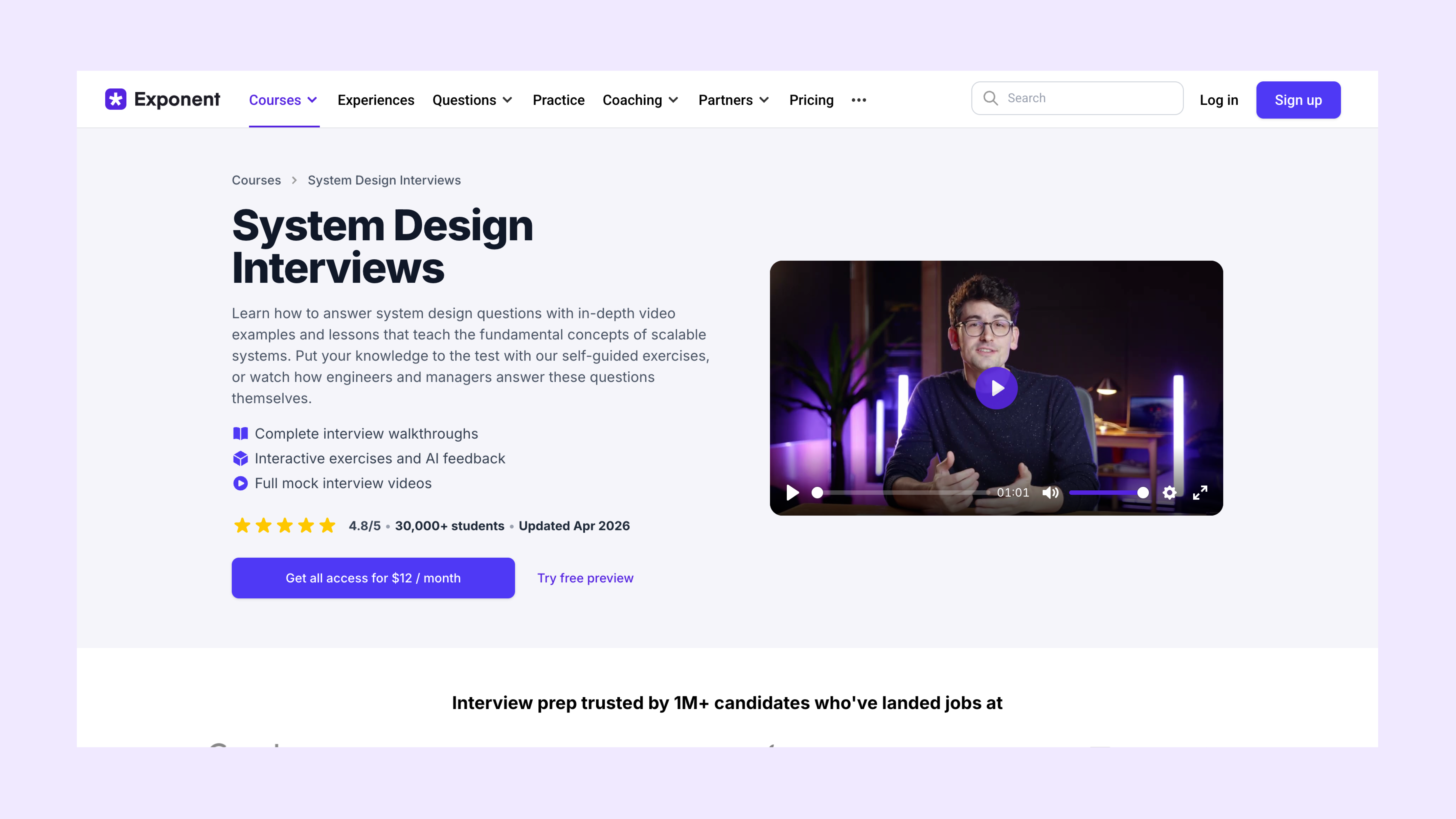
What it covers: A recorded mock system design interview between an engineer candidate and an experienced FAANG interviewer. The candidate works through a design problem in real time, scoping requirements, estimating scale, proposing architecture, and defending tradeoff decisions under probing follow-up questions.
Why this is irreplaceable: Reading about system design and watching explainer videos tells you what to know. This video shows you how a real round actually unfolds, the pacing, the back-and-forth, the way interviewers redirect, the moments where candidates recover from wrong turns.
The most valuable part to watch: Pay close attention to how the candidate handles ambiguity at the start and how they respond when the interviewer pushes back on a design choice. These two skills, scoping clearly and defending decisions confidently, are where most candidates lose points.
Who should watch it: Every candidate preparing for system design rounds, but especially those who have never experienced a real system design interview before.
9. Amazon Leadership Principles: What Interviewers Actually Want
What it covers: A structured breakdown of Amazon's 16 Leadership Principles, what each one means in practice, what kinds of stories map to each principle, and how Amazon interviewers evaluate your answers against the LP framework.
Why this matters beyond Amazon: Understanding the LP framework sharpens your behavioral storytelling across all FAANG companies. Every company evaluates some version of ownership, judgment, and impact. The LP structure is the most explicit version of this, and learning it makes your behavioral answers stronger everywhere.
What to do while watching: Map your own experiences to 5–6 LPs as you go. Pause the video after each principle and ask yourself: "Do I have a strong story for this?" The gaps you find are your preparation targets.
Who should watch it: Every candidate with an Amazon interview in their loop. Recommended for Meta and Google candidates as well, the behavioral frameworks are different in name, but the underlying evaluation logic overlaps significantly.
10. Mock Coding Interview , Thinking Out Loud, Clement Mihailescu
A full mock coding interview session where the candidate solves a medium-to-hard problem from scratch in real time, talking through their thought process, catching mistakes, adjusting their approach, and explaining their solution at every step.
Why this is the most important video on the list: Everything else prepares you for what to know. This video shows you what the performance actually looks like when it's executed well.
The single most useful thing to observe: Watch how the candidate fills silence. They never stop communicating. When they don't know the optimal approach immediately, they state what they're thinking, what they're ruling out, and where they're heading. That continuous narration is the skill interviewers reward, and it's the one candidates most consistently fail to practice.
How to use this video: Watch it once before you start your DSA prep to understand the standard you're building toward. Watch it again in week 10, just before your mock interviews, to recalibrate.
What YouTube Cannot Replace
These videos will make you significantly better prepared. But there's one thing no amount of passive watching can build: the ability to perform under real pressure, in front of a real person, while thinking and communicating simultaneously.
The first time you experience that combination in a live FAANG interview is too late to discover it's hard.
Mock interviews close this gap. At Intervue.io, mock sessions are run by engineers with real FAANG hiring experience, not simulations or AI tools. You get structured, round-specific feedback after each session that shows you exactly what to fix before the loop that counts.
The candidates who pair these YouTube videos with deliberate mock interview practice consistently outperform those who only watch.
Summary
These 10 videos represent the most efficient path through YouTube's FAANG prep ecosystem, one video for each critical gap in preparation, in the order that builds on each previous one.
The formula:
- Use NeetCode for DSA patterns and coding approach
- Use ByteByteGo and Gaurav Sen for system design foundations
- Use Exponent for seeing how real interview rounds actually unfold
- Use Clement Mihailescu for understanding what strong live performance looks like
And when you're ready to test what you've learned against real interview pressure, with a real engineer, structured feedback, and no safety net, try a mock interview on Intervue.io.